Exploring Cambridge: Hidden Gems and Quirky Charms
Quick answer: Cambridge's best hidden gems include the Corpus Clock and its time-eating Chronophage, the WWII airmen's graffiti on the ceiling of the Eagle pub, the Mathematical Bridge at Queens', the Cambridge Rules football monument on Parker's Piece and the house at Kettle's Yard. Most are free to see from the street, and all are within a short walk of the centre.
Cambridge is famous for its university, but the city is full of odd stories, curious landmarks and small surprises that most visitors walk straight past. Here are the quirky sights, architectural highlights and independent shops worth seeking out. Many are free, so pair this with our guide to free things to do in Cambridge and you can fill a weekend without spending much at all.
Quirky sights and curious stories
1. The Corpus Clock and the Chronophage
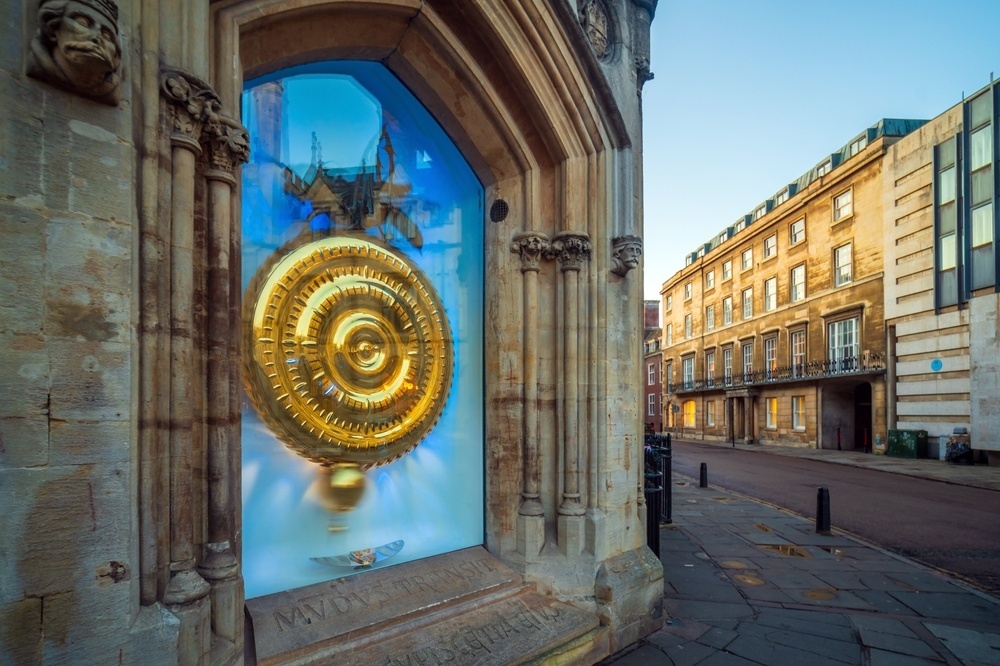
On the corner of Bene't Street and King's Parade sits one of Cambridge's strangest sights. The Corpus Clock has no hands or numbers: blue lights flicker through slits in its gold-plated face to show the time. On top crawls the Chronophage, or "time eater", a giant grasshopper-like creature that appears to devour each passing minute. It was invented by Dr John C Taylor and unveiled by Stephen Hawking in 2008. Free to see from the street.
2. The Eagle pub
Also on Bene't Street, the Eagle is where Francis Crick told lunchtime drinkers on 28 February 1953 that he and James Watson had "discovered the secret of life": the structure of DNA. A blue plaque by the door now also credits Rosalind Franklin and Maurice Wilkins. Head to the back bar to see the ceiling, covered in names, squadron numbers and doodles written in candle smoke and lipstick by Second World War airmen.
3. The Mathematical Bridge
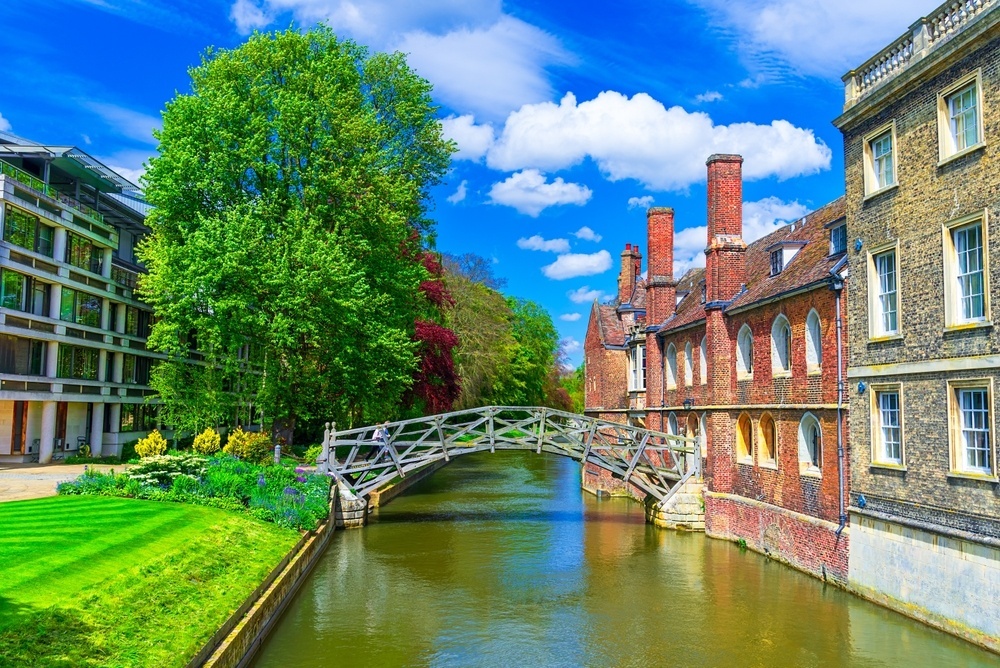
This wooden footbridge at Queens' College looks curved but is made entirely of straight timbers. Two myths follow it around: that Isaac Newton designed it (he died 22 years before it was built) and that it was held together without nails or bolts. In fact, James Essex built the first bridge in 1749 to William Etheridge's design, there have always been fixings at the joints, and today's bridge dates from 1905. Get the best view from Silver Street bridge, or from a punt.
4. Parker's Piece and the Cambridge Rules
In 1848, students drew up 11 simple rules so everyone at the University played the same version of football. Those Cambridge Rules became a foundation for the Football Association's rules of 1863. A monument on Parker's Piece, unveiled in 2018, has the rules carved into it in many languages. While you are there, find the lamp post in the middle of the green, known locally as "Reality Checkpoint".
5. Newton's apple tree
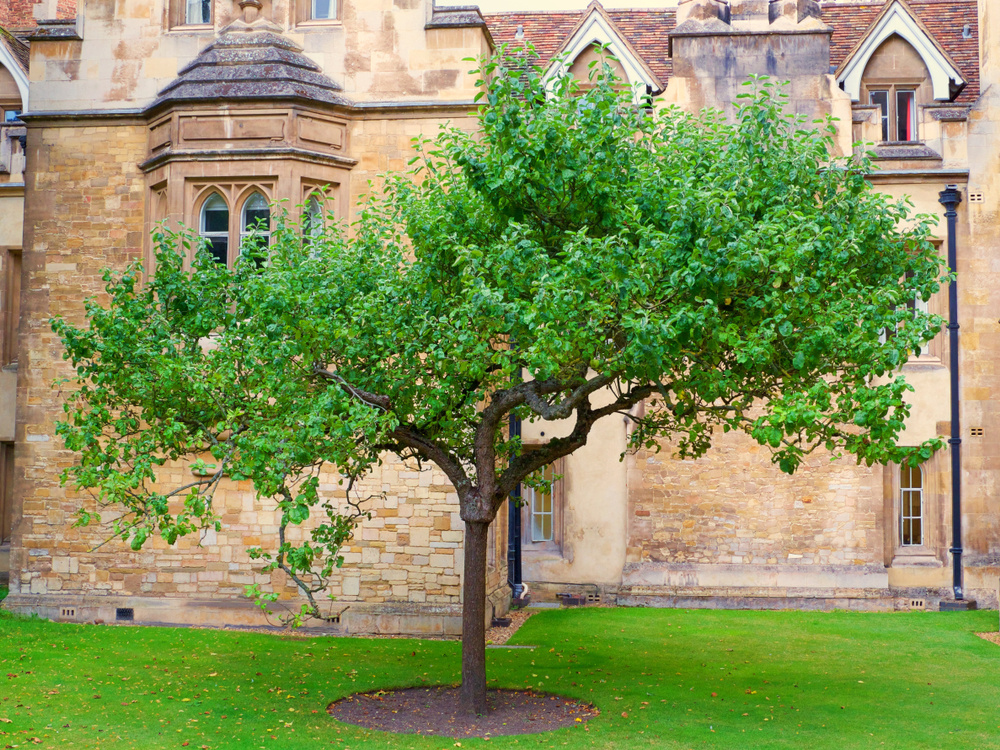
Outside the main gate of Trinity College on Trinity Street grows an apple tree with a famous family tree. It was grafted from the tree at Woolsthorpe Manor in Lincolnshire, Isaac Newton's childhood home, and planted in 1954 to mark his time at Trinity.
6. Darwin's Cambridge
Charles Darwin studied at Christ's College, where a statue of him as a young student sits in the college garden. Specimens he collected on the voyage of the Beagle are now at the free Museum of Zoology on Downing Street, alongside a fin whale skeleton you can see from the street.
7. Hobson's Conduit and "Hobson's choice"
Thomas Hobson ran a livery stable in 17th-century Cambridge and made customers take the horse nearest the door or none at all. That gave English the phrase "Hobson's choice". He also helped fund Hobson's Conduit, which brought clean water into the town; you can still see its channels running alongside Trumpington Street.
8. Kettle's Yard
The former home of Jim and Helen Ede on Castle Street is filled with 20th-century art, pebbles, light and found objects, arranged exactly as they left it. The galleries are free, and the house is free for visitors aged 25 and under. Other adults pay £13 (£14.50 with a donation). Open Tuesday to Sunday, 11am to 5pm.
9. Fitzbillies' Chelsea buns
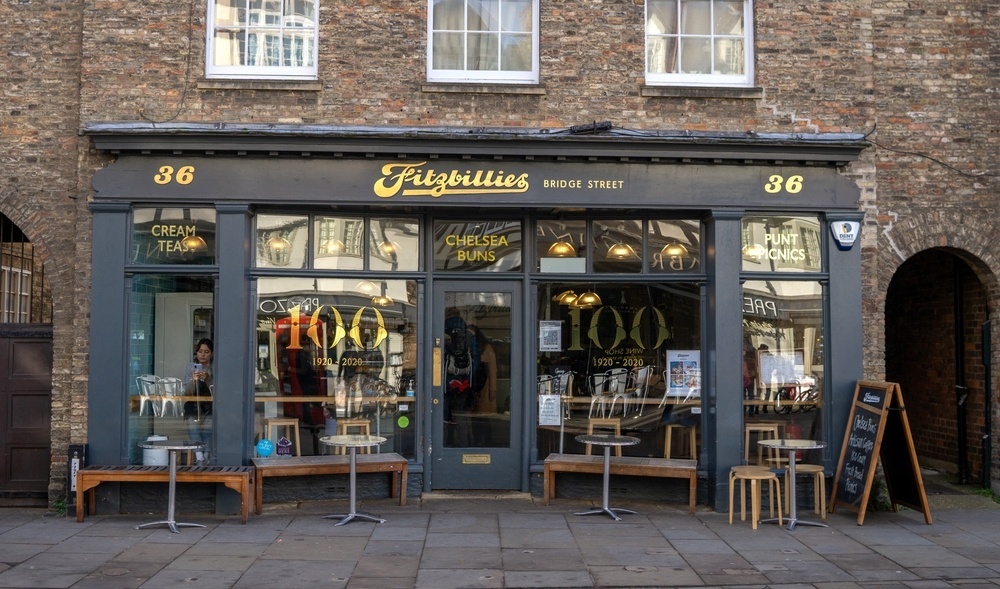
Fitzbillies has been baking on Trumpington Street since 1920 and is famous for its sticky Chelsea buns. When it went bust in 2011, a public appeal by Stephen Fry helped bring it back. It now has branches on Bridge Street and King's Parade too. For more places to eat, see our guide to the best restaurants, bars and foodie spots in Cambridge.
Architecture worth seeking out
10. King's College Chapel
Building began in 1446 under Henry VI and took nearly a century. Its fan-vaulted ceiling is one of the great sights of English Gothic architecture, and its 16th-century stained glass survived the Civil War. A daytime visit is paid, but Choral Evensong in term time is free.
11. The Bridge of Sighs
St John's College's covered bridge was designed by Henry Hutchinson and finished in 1831. It shares a name with the Venetian original but little else. You can admire it from the Backs or from a punt; for something different, try winter punting on the River Cam.
12. The Wren Library, Trinity College
Sir Christopher Wren designed this light-filled library in the late 17th century, and it holds rare manuscripts and early printed books. Opening to visitors is limited, so check Trinity's website before you go.
13. The Senate House
James Gibbs designed this Georgian landmark on King's Parade, completed in 1730. It is still where students graduate, so in late June and July you may see gowned graduates spilling onto the lawn.
14. The Round Church and St Bene't's
The Round Church on Bridge Street was built around 1130 and is one of only four medieval round churches still in use in England. Entry is £3.50, and free for under-13s and residents of CB1 to CB5. Nearby, St Bene't's Church has a Saxon tower that is thought to be the oldest surviving building in Cambridge.
15. The Pepys Library, Magdalene College
Samuel Pepys left his personal library to Magdalene, including the manuscript volumes of his famous diary, still kept in his own bookcases. Opening is limited, so check Magdalene's website.
Independent shops and markets
Central Cambridge is full of small streets where independents still outnumber the chains.
- Green Street: a narrow street of fashion boutiques, jewellers and specialist shops, just off Sidney Street.
- Rose Crescent: a short curved lane between Market Street and Trinity Street, lined with independent fashion and gift shops.
- All Saints Garden market: an arts and crafts market on Trinity Street every Saturday, 10am to 4pm. Everything on sale is handmade, from pottery and prints to jewellery.
- Cambridge Market: on Market Square seven days a week, with street food, books and local produce.
- King Street: independent shops, cafés and some of Cambridge's oldest pubs, a short walk from Midsummer Common.
- Mill Road: Cambridge's most eclectic street, with charity and vintage shops, record shops and food from around the world. It also hosts the Mill Road Winter Fair, usually on the first Saturday in December.
Hungry after all that walking? Our guide to affordable restaurants in Cambridge covers cheap eats, and our date night guide has ideas for an evening out. Visiting with children? See kid-friendly activities in Cambridge.
Own a home in Cambridge?
Cambridge's mix of history, curiosity and culture keeps visitors coming all year, from academics and graduation guests to weekend explorers. If you own a property in the city, that demand is an opportunity. Pass the Keys provides full-service short-let management in Cambridge, from listings and pricing to cleaning and guest messages. Find out how much you could earn from a Cambridge holiday let.
Frequently asked questions
What are the hidden gems in Cambridge?
Top picks include the Corpus Clock, the RAF ceiling at the Eagle pub, the Mathematical Bridge, the Cambridge Rules monument on Parker's Piece, Kettle's Yard, the Round Church and the Pepys Library.
Was the Mathematical Bridge built without nails?
No. That is a popular myth, as is the story that Isaac Newton designed it. The bridge has always had fixings at the joints, and the current one was built in 1905.
What is the Chronophage?
It is the giant grasshopper-like creature on top of the Corpus Clock, on the corner of Bene't Street and King's Parade. Its name means "time eater".
Which Cambridge pub is linked to DNA?
The Eagle on Bene't Street. Francis Crick announced there in 1953 that he and James Watson had found the structure of DNA.
What is unusual about Cambridge?
It is where the first football rules were written, where DNA's structure was announced in a pub, and where a clock eats time. Even the colleges hide surprises, from an apple tree grafted from Newton's to Pepys's diary.
I own a property in Cambridge. Could I let it to visitors?
Yes. Cambridge has steady demand from tourists, academics, graduation guests and business travellers. Pass the Keys manages short lets across the city so you earn without the day-to-day work. Get in touch with our Cambridge team for a free estimate.