If you own a London property and fancy earning rental income from short term letting, there is one number you need to tattoo on your brain: 90. That is the maximum number of nights per calendar year you can short-let your entire home in Greater London without planning permission. Whether you are brand new to hosting or already deep into your rental business, understanding the 90 day rule in London is non-negotiable. Professional Airbnb management in London can help you stay compliant while squeezing every penny of value from those precious nights.
Quick explanation of the London 90‑night rule (answer fast)
Here is the rule in plain English, no jargon required:
- In Greater London, you can short-let your entire property as temporary sleeping accommodation for a maximum of 90 nights per calendar year without requiring planning permission. Those 90 nights do not need to be consecutive nights - scattered weekends, week-long bookings and one-off stays all count towards the same total.
- The 90 day rule limits short term rentals to 90 nights annually and applies only to entire home listings in Greater London where the host is not present. Hosted stays, where you live on-site and rent out a spare room, are treated differently and are not caught by this cap.
- This statutory cap is part of planning law, introduced by the Deregulation Act 2015, and enforced by local councils across all 32 London boroughs plus the City of London.
- Airbnb has built its own automatic enforcement - the Airbnb 90 day rule - that blocks further bookings once a listing hits 90 nights. But the legal limit applies regardless of platform. If you also list on Booking.com, Vrbo or use direct booking channels, every night counts.
What exactly is the Airbnb 90 day rule in London?
The legal 90 night rule and Airbnb's own night cap are closely related, but they are not identical. The law is broader; the platform tool is narrower. Here is how they compare in practice.
- London hosts who pay council tax on a residential property can let their entire home as temporary sleeping accommodation for up to 90 nights per calendar year without planning permission. Being a council tax payer at the property is one of two legal conditions for the exemption.
- Since early 2017, Airbnb automatically blocks entire home listings in Greater London once 90 booked nights are reached in a calendar year, unless the host proves they hold relevant permissions. A visible counter in the host dashboard tracks progress towards the cap.
- The 90 nights can be consecutive nights or scattered throughout the year. Either way, the counter resets on 1 January, matching the legal definition's annual cycle. The 90-night limit resets on January 1 each year.
- The legal 90 day rule in London applies across all platforms and direct bookings - Airbnb's system can only see nights booked through Airbnb. Other platforms may or may not track nights for you.
- Private rooms and hosted stays (where the host remains in the property) are not restricted by the same 90-night cap. The rule targets the use of an entire property as visitor accommodation without the owner present.
Why was the 90 day rule introduced?
The rule is a deliberate compromise: allow Londoners to share their homes flexibly, without letting residential properties morph into full-time commercial hotels.
- Before the Deregulation Act 2015, the Greater London Council (General Powers) Act 1973 technically required planning permission for any short stay - even a single night. That was unworkable in the age of platforms.
- The 90 night rule was designed to legalise casual home-sharing while stopping year-round holiday lets from hollowing out long term rentals and damaging housing supply. The rule aims to protect long-term housing stock in Greater London.
- Inner central boroughs facing chronic housing shortages and rising rents were a key driver. The rule prevents residential properties from becoming full-time commercial hotels that pay no regard to neighbourhood character.
- London's approach mirrors a global trend. Amsterdam, Paris and Barcelona have all adopted their own night caps or registration schemes. Paris, for example, caps entire-home short lets at 120 nights per year for primary residences.
- Political momentum has not slowed. The Mayor of London and several boroughs have argued for a tighter cap, and draft London Plan policies reinforce that homes should not be used as short-term holiday accommodation beyond 90 nights without seeking planning permission.
Where and to whom does the London 90‑night rule apply?
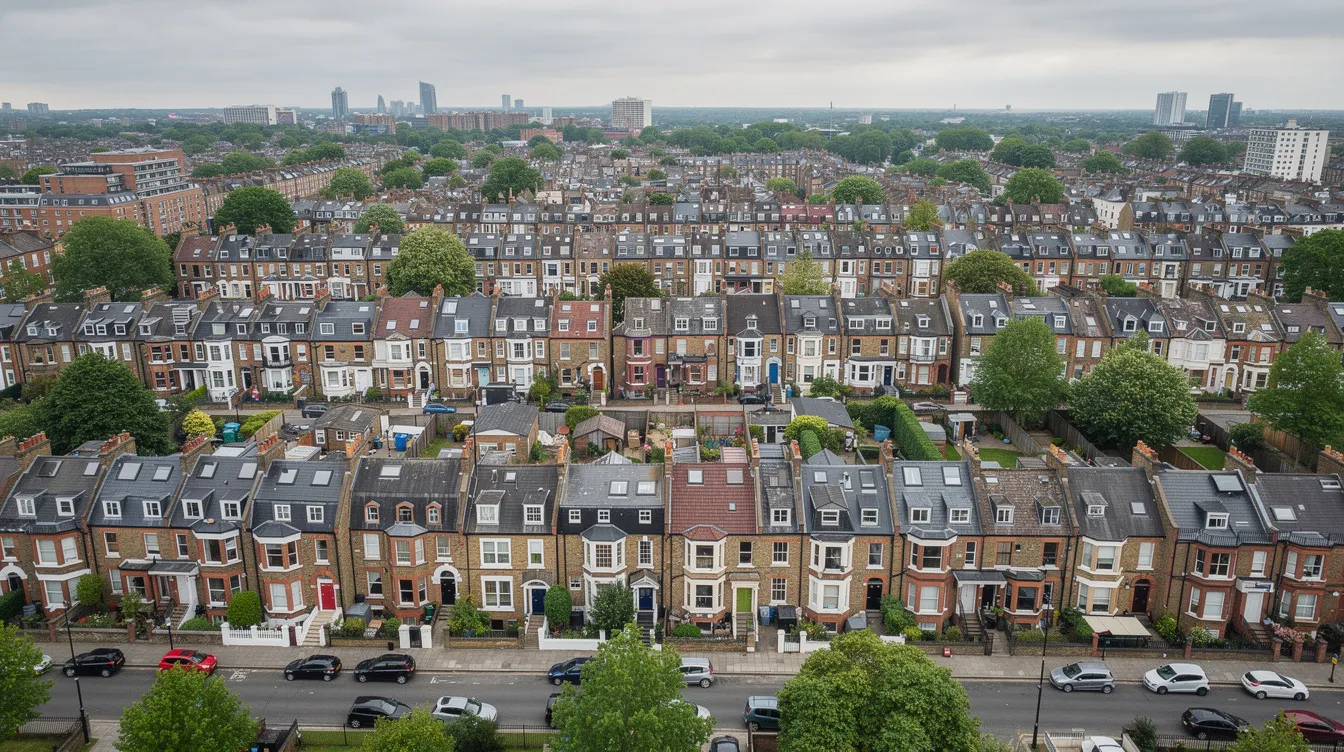
The 90 night limit is specific to Greater London. If you also own property in Manchester or Bristol, rules differ - properties located outside Greater London are not subject to the 90-night rule, although local regulations and planning rules still apply.
- The rule covers all 32 London boroughs plus the City of London. Outside Greater London there is no statutory 90-night cap.
- It applies to London properties used as temporary sleeping accommodation where the entire home is available and the host is not present during the guest's stay.
- The cap is per property, not per listing or per platform. If you list the same flat on Airbnb, Vrbo and your own website, every night from platforms combined feeds into the same 90-night total.
- Local councils - Westminster, Camden, Kensington and Chelsea among the most active - are responsible for enforcing breaches under planning law. Each local authority has its own resourcing and appetite for enforcement action.
- Hosted stays and mid term lets of 90 or more consecutive nights fall outside this specific cap, but may trigger other obligations such as licensing, landlord duties, or compliance with the Renters' Rights Act.
Hosted stays, mid term lets and other important exemptions
Not every booking in London eats into your 90 nights. Understanding the exemptions is just as important as understanding the cap itself.
- Hosted stays - renting out a private room while the homeowner is present - are exempt from the 90-night cap and can usually operate year-round. Renting out a private room while the homeowner is present is explicitly excluded from the planning restriction.
- Bookings of 90 or more consecutive nights to the same guest are normally treated as mid term lets or longer-term tenancies and do not count towards the short-let night cap. Mid term lets are popular after London hosts reach their 90-night allowance.
- Properties with formal planning permission for short-term or serviced apartment use are exempt from the cap, subject to any conditions attached to the consent.
- Lease terms, freeholder rules, building rules and fire risk assessments can still restrict hosted stays and mid term lets even when planning law allows them. Health and safety obligations apply to short-term accommodation under the 90-night rule. Before listing, check whether your property is suitable.
- Tenants cannot sub-let properties on a short-term basis without landlord consent - even for a single night.
- Councils may also treat repeated, back-to-back "mid-term" stays differently if the pattern looks like a de facto full-time short-let business rather than genuine longer lets.
How the 90‑night cap is counted and enforced across platforms
The legal limit is platform-agnostic, but each platform enforces (or fails to enforce) it differently. That gap is where property owners get caught out.
- Airbnb automatically counts booked nights on entire home listings in Greater London and locks the calendar once 90 nights are reached, preventing further bookings unless the host uploads proof of planning permission.
- Other platforms such as Booking.com and Vrbo may not have reliable automatic enforcement, so London hosts must track nights themselves across multiple platforms.
- If you accumulate 60 nights via Airbnb and 40 via direct bookings, you have hit 100 nights in planning terms and are in breach. Tracking total booked nights across platforms is essential.
- Booking patterns exceeding 90 nights can attract planning enforcement action. Councils increasingly use data scraping, neighbour complaints and the coming national registration scheme to spot properties over the limit. Some boroughs are already under heavier scrutiny than others - boroughs like Westminster actively enforce the 90 day rule.
- GLA research from 2015–2019 found that up to 56% of entire home listings in high-pressure areas were "at risk" of exceeding the cap, yet enforcement remained low. In Kensington and Chelsea, only 15 enforcement notices were issued over four years. That is changing.
- Pass the Keys uses unified calendars and professional systems to track nights across all channels for clients, so no booking slips through the cracks.

What happens if you go over the 90 nights without permission?
Exceeding 90 nights without planning permission is a breach of planning control - not just a slap on the wrist from a platform. A property that exceeds the 90 nights cap is considered a material change of use.
- Typical enforcement steps begin with warning letters, then Planning Contravention Notices, followed by formal enforcement notice orders from your local council. Councils can take enforcement action for planning breaches at any point.
- Ignoring an enforcement notice is a criminal offence. Fines can be substantial - exceeding 90 nights can result in fines up to £20,000 per offence, and some planning fines carry no statutory upper limit (an unlimited fine in the most serious cases).
- Enforcement actions often start with neighbour complaints about noise, waste or the constant churn of arriving and departing guests. One irritated neighbour with a diary is more effective than any algorithm.
- Knock-on risks stack up fast: breach of mortgage terms, breach of lease covenants, invalid insurance, and the possibility of being required to reverse any unlawful change of use. Your mortgage interest relief position may also be affected if the lender discovers unauthorised commercial activity.
- Planning permission is required to exceed the 90-night limit. If you are contacted by the local authority, seek planning advice immediately rather than hoping the problem disappears. Early engagement almost always produces a better outcome than silence.
Legal ways to operate beyond the 90‑night limit
There is no magic loophole to dodge the rule, but there are perfectly compliant strategies to keep your property earning after the 90 nights run out.
- The main options are: applying for planning permission (requiring planning permission for change of use), switching to mid term lets of 90 or more consecutive nights, converting to a long-term tenancy, or blending strategies across the year.
- You need planning permission to exceed 90 nights, and you can apply for it from your local council. Applications typically take 8 to 13 weeks and involve fees, neighbour consultations and no guarantee of approval. Approval rates for planning permission vary by borough - Westminster and Camden have high refusal rates for short-let applications, while some outer boroughs may be more receptive.
- Mid term lets to corporate guests, relocating professionals or students provide steady rental income that sits outside the short-let definition. Corporate lets are also exempt from the Renters' Rights Act, giving landlords greater flexibility.
- A standard long-term tenancy removes 90 day rule risk entirely but reduces flexibility on pricing, access and the ability to use the property yourself. It also means navigating permitted development rights and tenant protections.
- Some hosts pursue a serviced apartment model with full change-of-use consent, though this shifts the property into business rates territory and may affect capital allowances and business asset disposal relief calculations. Investment decisions at this level warrant professional tax and planning advice.
The national registration scheme and what it means for London hosts
England is rolling out a national registration scheme for short-term lets that will sit alongside - not replace - the London 90 night cap. This is the biggest regulatory shift since the Deregulation Act.
- The scheme stems from the Levelling Up and Regeneration Act 2023 and the National Registration Scheme launches in April 2026. All English short-term lets must register and display a registration number on every platform listing.
- London hosts will need to register each short-let property, obtain a registration number and display it on platforms such as Airbnb and Booking.com. Civil penalties of up to £5,000 are proposed for non-registration.
- Platforms may be required to verify registration and delist unregistered properties, making it considerably harder to fly under the radar. The scheme aims to improve enforcement of the 90 day rule by giving councils cross-platform visibility for the first time.
- The nationwide scheme does not change the 90 day rule in London. London hosts will need to comply with both the local night cap and the potential registration requirements. Stay up to date on what this means for your property in 2026.
- Existing short-lets will be reclassified into a new C5 use class, formalising when change-of-use consent is needed. The government has also proposed a dedicated planning use class for short-term lets, which could further tighten local authority control in high pressure areas.
How Pass the Keys helps London hosts navigate the 90 day rule
We specialise in compliant, profitable short-let and mid term strategies tailored to London's 90 night cap. Our job is to make sure you earn well without accidentally earning an enforcement notice.
- We track 90 nights across all channels for each property using unified calendars and reporting, ensuring clients do not accidentally breach the cap - even when listing on multiple platforms.
- We design bespoke strategies for London hosts, blending peak-season short lets with mid term stays and hosted stays where appropriate to maintain occupancy and maximise earnings. A hybrid rental model can achieve up to 98% occupancy when structured correctly.
- As a management company, we handle listing optimisation, dynamic pricing, guest vetting, cleaning, turnover costs management and neighbour communication to minimise complaints that might trigger council attention.
- Our team stays ahead of borough-by-borough rule changes, the national registration scheme and evolving enforcement practice so clients do not have to. We monitor everything from Westminster's strict stance to emerging policy in outer boroughs.
- If you want tailored planning advice on structuring your Greater London property around the statutory cap, get in touch with Pass the Keys.

Key compliance tips for London hosts under the 90‑night cap
Consider this your quick checklist. Tape it to the fridge if that helps.
- Keep a simple master record of all booked nights across every platform and direct booking channel. Do not rely solely on Airbnb's counter - it cannot see what happens on other platforms.
- Decide in advance how to "spend" your 90 nights. Focus on high-yield months, major events, bank holidays and peak periods where dynamic pricing can maximise revenue during peak season. Smart portfolio managementmeans treating each night as inventory.
- Once your 90-night allowance is used, switch to mid term lets or longer property stays rather than sitting empty. A void period is wasted money.
- Check lease terms, building rules, mortgage conditions and insurance policies before listing any London residential properties. A planning-compliant listing can still breach your lease.
- Engage early with neighbours and set clear house rules around noise, waste and check-in times. Complaints are the number one trigger for council investigations - staying on good terms is your best defence.
- Stay compliant by reviewing your strategy each calendar year. Local regulations evolve, boroughs update enforcement priorities, and peak demand shifts between zones and seasons.
Frequently asked questions about London's 90‑night short‑let rule
Does the 90 day rule apply to private rooms and hosted stays? No. The cap applies to entire home short lets where the host is not present. Hosted stays, where you live in the property and rent a spare room, are exempt and can operate year-round.
Is the cap 90 nights per listing, per platform, or per property? Per property, across all platforms combined. It does not matter how many listings or channels you use - the legal limit is tied to the physical property.
Does the Airbnb 90 day rule apply outside Greater London? No. Outside London there is no statutory 90-night cap, though other planning or licensing rules may apply depending on the local authority.
What counts as a "short-term let" under the rule? Entire-home temporary sleeping accommodation for short term stays under 90 consecutive nights. Longer bookings are classified differently.
How do the 90 nights reset? It is a calendar-year allowance resetting on 1 January each year, regardless of when you started hosting. Airbnb's counter resets at the same time.
I am not sure how the rule affects my property - what should I do? Seek professional planning advice and consider working with a specialist like Pass the Keys who can assess your property, structure a compliant strategy, and handle the day-to-day management so you can focus on the returns.