
Airbnb and Short-let management in London
We put your property on sites like Airbnb, so you don't have to. Get a quote now.
Airbnb and Short-let management in London
Hassle-free short-let management that optimises your rental income.
Why let Pass the Keys manage your Airbnb?
We take care of everything, so you don't have to!

Local Experts
Our team of local partners have a vested interest in making sure your property performs well. This means that you can enjoy passive income all while knowing that your investment is looked after by a team that knows the area as well as you do.
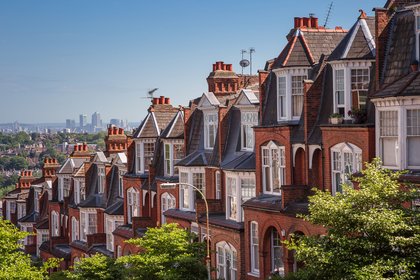
Dynamic Pricing
Demand changes, and so should your prices! Our smart technology automatically adjusts your rates to capture peak demand while keeping bookings coming in during quieter months.

Highly Rated
We focus on delivering five-star stays at every touchpoint so that you can reap the rewards of stronger visibility, higher occupancy and better returns for your property.
Find out More
Hotel-Quality Cleaning
Professionally laundered high-thread-count linen and hotel-standard toiletries are provided by our team for every stay so that your guests know they’re always getting the best.
Find out more
Optimised Listings
We handle all the professional photos, dynamic pricing, and every other aspect of your listing advertised on our website, plus 20 different platforms, including Airbnb and Booking.com, so that you don’t ever have to worry if you’re missing out on potential revenue.
Discover more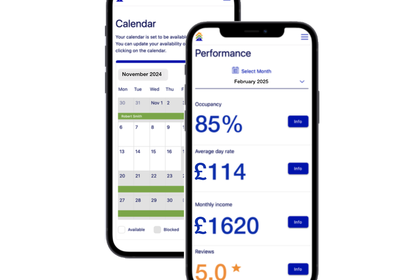
Client Portal
See all your upcoming bookings, monthly income reports, average daily rates (ADR), reviews and maintenance updates in real-time. Relax and rest assured that your property is being managed by our expert team.

24/7 Guest Support
We know guest communication can be time-consuming, and that's why we do it for you. We manage all guest communications from enquiry through to check out, so you don't have to get involved. 24/7 communication with your guests is handled entirely by us.

Complete Peace of Mind
Your dedicated local partner handles the "frontline" so you don’t have to. Whether you’re across town or across the globe, we're there when you can't be. Protecting your property and communicating with your guests when you can’t.
Find out more about our services
We put our fee on the line. You only pay when we deliver.
If an eligible Airbnb stay receives a guest review below 4 stars, or a Booking.com review below 7, Pass the Keys waives its management fee for that booking — no gimmicks, just accountability.
- Fee waived on any booking that falls below our review threshold
- Every low review triggers a full quality audit and corrective action
- The only short-let manager that puts its own fee at risk
(selected locations only, view the full list here.)
Our team of experts in London!

Meet Saad
Hi, I’m Saad and I’m the owner of Pass The Keys® Islington, Covent Garden and Bloomsbury. I live in Canonbury, right by the station, and I’m an experienced Airbnb Superhost myself with over 7 years of hosting experience and a 4.96* rating. Although American and Pakistani by origin, I moved to London 12 years ago as a student at the London School of Economics, fell in love with the city and have lived here since.

Meet Jim
Jim is the dedicated City Manager for Pass the Keys London South, bringing a wealth of property and hospitality experience to the role. Jim’s hands-on approach and commitment to a high-quality service ensures the London South portfolio is managed to the highest standards, delivering excellent returns for hosts and 5-star experiences for guests.
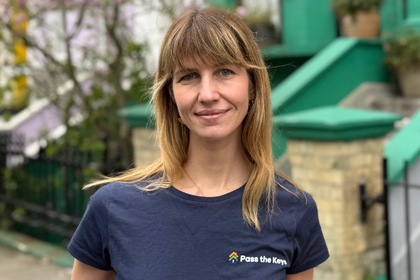
Meet Sophie
Sophie is a people first professional Territory Manager for Pass The Keys London North. With a background in Retail, Design and Experiential Services - she builds connections and spaces where memorable experiences are made. Her dedication to go above and beyond in creating tailored and bespoke frameworks that work for the individual needs of Hosts has built a strong portfolio for London North ensuring the ultimate client and guest experience.

Meet Shahzoda
Meet Shahzoda, owner of Pass the Keys Greenwich & Bexley. Greenwich is one of the best places to visit in London. It offers something of interest to every visitor. Some of these include tourist hotspots, historic attractions, bustling markets, beautiful parks and gardens, and an abundance of fresh air.

Meet Darren and Lydia
Hi, I am Darren. I have lived in Lewisham and the surrounding areas all of my life. My background has been in retail buying and merchandising for more than 20 years. I've also operated my consulting and online businesses successfully. Also, I've been involved in buying and selling property for the last 10 years. I am particularly excited to have my partner, Lydia, joining me on this venture. Lydia has vast experience in customer service and business administration. Together, we are thrilled to be able to offer a best-in-class management service for Lewisham, Peckham and Bermondsey landlords, in what are some of the most vibrant and cosmopolitan areas of London.

Meet Remi
My name is Remi and I am thrilled to be the proud owner of Pass the Keys®️ franchise for North Kensington. I’ve fallen in love with the city's fast-paced lifestyle, artistic vibe, and tourism hotspots. North Kensington is a highly demanded area, due to its vast tourism hotspots, including Notting Hill, Hyde Park, Royal Albert Hall, Kensington Palace, and the culturally diverse Portobello Road market. I aim to take a comprehensive approach when partnering with landlords to maximise their return on investment, whilst offering a hassle-free service. My hospitality experience helped me learn that cleanliness, comfort and exceptional customer service towards our guests, are crucial to thriving in the short-let industry.

Meet Younes
Introducing Younes, your dedicated partner at Pass the Keys® - East London. With a deep-rooted connection to East London and a rich background in business management, I am fervently committed to delivering excellence, ensuring your properties shine and prosper in this vibrant community.

Meet Anastasiia
My name is Anastasiia, the owner of Pass The Keys - Mayfair! I adore Mayfair for its historical value, ambiance and glamour. My fervent desire is to enhance guests' stays, allowing them to fully immerse themselves in the magnificent allure of this iconic area of London and discover its true beauty.

Meet Paul and Nancy
We are Paul and Nancy, partners of Pass the keys- North West London. We both think North West London has so much to offer. It has many fantastic restaurants, parks such as Regents Park and Hampstead Heath and all very close to the West End. For both of us North West London has many areas such as Hampstead, West Hampstead and St John`s Wood that have a real sense of community.

Book direct with Pass the Keys
We optimise occupancy for our hosts through the main distribution channels, and our own website for guests.
What Airbnb management services does Pass the Keys provide?
We can provide you with a number of services in relation to your property, including the following (all services to be confirmed by local account manager):



What is a professional Airbnb co-host?
Due to the size of our property portfolio and the consistent quality of our service, Pass the Keys was invited to become an official Airbnb co-host in 2018.
This exclusive status provided Pass the Keys with a key account manager and direct integration with their systems so that we could dynamically update pricing, report on guest behaviour and other key metrics. We have retained our advantages as a valued partner even though Airbnb has now withdrawn the program (2022).

View your Property Performance in Real Time
View all the relevant info on your host account 24/7. It is quick and easy to use and available on all platforms..
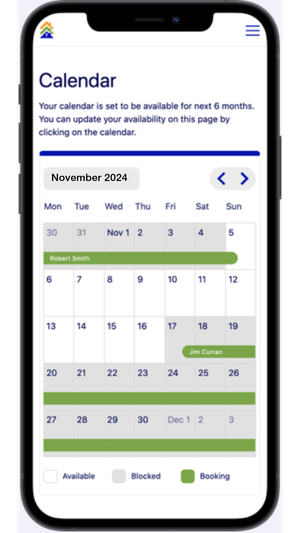


View all upcoming guest bookings at a glance. Book personal stays in your short let property through our calendar by simply blocking the dates.
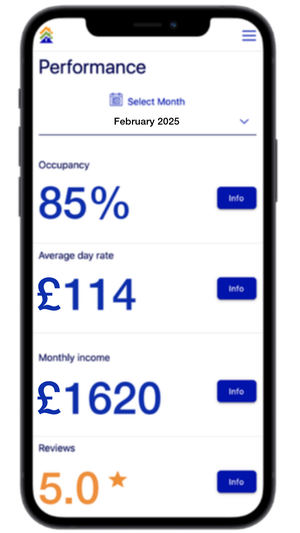
Track the rental income for your property for any given month and monitor occupancy rates and average daily rates.
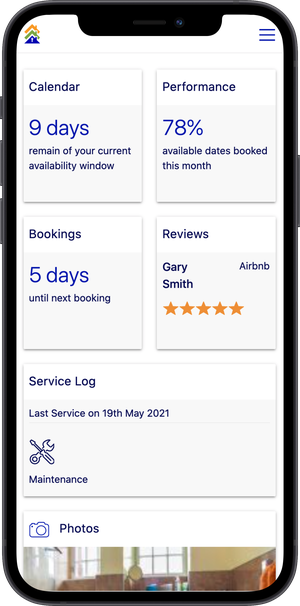
View key information about bookings and occupancy. View the service log to see the photos after each clean and guarantee peace of mind that your property is in safe hands.
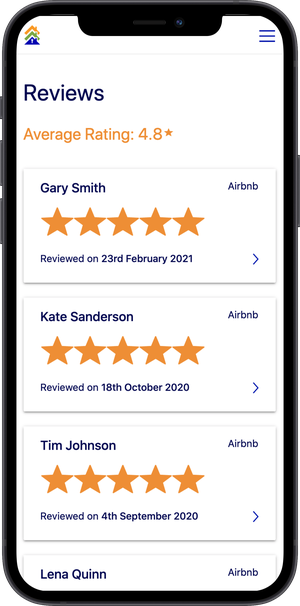
Read the wonderful reviews your guests leave for your property. See each one as it comes in and your average rating.
Property Management Service in London
London is a Global City, one of the world’s most dynamic and interesting places to visit, and therefore it comes as no surprise that it ranks as the third most popular city in the world on marketplaces such as Airbnb, Booking.com and other short-letting platforms. 21 million tourists visit the capital each year, many of which are looking for flats to rent in London and guests really are spoilt for choice when it comes to London Airbnb Hosting! The number of short term rentals in London increased to over 80,000 in 2020. But Airbnb’s phenomenal growth isn’t stopping there; the London rental market is set to continue to grow at a steady pace.
Airbnb London apartments provide a great alternative to traditional hotel-style lodgings. London is an immensely popular city to visit all year round so the demand for flats in London is very high, as is the demand for Airbnb management in the city. Zone 1 and 2 are prime for achieving a high return on London apartments for rent.
Our Airbnb management company will help you optimise your pricing strategy to ensure you get the best income possible from your London property. We’ll also ensure you get the highest occupancy rate possible by advertising your London short let on the largest short letting platforms out there e.g. Airbnb, Booking.com & VRBO. Our London based property management service also employs Airbnb cleaners, manages bookings and handles all guest enquiries via our 24/7 support service. For an Airbnb short let company London with a twist, give us a call today
We are London's leading short-term letting agents
Read our latest Airbnb hosting tips and guidance for property owners in London.
Do You Need Airbnb Management in London?
Managing an Airbnb in London can be a good way to make use of a property, but it isn't necessarily a hands-off source of income.
Read MoreThe Most Highly-Rated Airbnb Management Company in Islington
As an Airbnb host, selecting the right management company in Islington is a decision that can significantly affect both your income and your peace of mind. From Angel and Highbury to Canonbury and beyond, landlords want a partner they can trust, a team that understands the local market, can maximise earnings, and ensures the smooth day-to-day running of their property.
Read MoreAirbnb Management Company in Islington: Your Fully Managed Service
If you are considering which Airbnb management companies in Islington provide a fully-managed service, the reality is that only a few offer a comprehensive, end-to-end package. Among them, Pass the Keys stands out as the most established and trusted operator locally.
Read MoreMaximise Your Airbnb Earnings in Islington with Pass the Keys
As a homeowner in Islington, you are likely aware of the potential of short-term rentals. With its vibrant culture, leafy squares, and proximity to central London, Islington attracts both tourists and business travellers. For property owners, the key question is which Airbnb management company can deliver the highest returns.
Read MoreShort-Term Rental Rules in Islington: What Hosts Need to Know
Islington remains one of London's most attractive areas for short-term rentals, thanks to its central location, Victorian properties, restaurants, nightlife and strong business and leisure demand. However, hosts need to navigate London's 90-night short-let limit, planning requirements, property safety rules and upcoming national registration requirements.
Read MoreIs There a Local Airbnb Manager in Covent Garden and Bloomsbury?
Yes. Pass the Keys Covent Garden & Bloomsbury provides Airbnb management in London for property owners across these central London neighbourhoods.
Read MoreMaximise Your Airbnb Earnings in Central London with Pass the Keys
If you’re a property owner in Covent Garden or Bloomsbury, you’ve likely asked yourself which Airbnb management company can help you achieve the highest possible earnings. These two areas sit at the very heart of London, with Covent Garden’s theatres, dining, and shopping, and Bloomsbury’s museums, universities, and cultural landmarks, demand for short-term rentals is consistently strong.
Read MoreLocal Airbnb Management in Covent Garden and Bloomsbury
Managing a short-let property in Covent Garden or Bloomsbury can be both highly rewarding and highly demanding. These are two of London's most vibrant neighbourhoods, attracting a constant flow of visitors drawn to the West End theatres, historic landmarks, world-class dining, and cultural institutions. As a result, properties in this part of London enjoy some of the highest occupancy rates in the capital. However, with this opportunity comes significant responsibility — guest management, maintenance, pricing strategies, and compliance with short-let regulations are all essential to long-term success, which is why many owners turn to a specialist Airbnb management London service to handle it all.
Read MoreShort-Term Rental Rules in Covent Garden & Bloomsbury: Your 2026 Guide
Covent Garden, within Westminster City Council, and Bloomsbury, within Camden Council, remain among London's most attractive locations for short-term accommodation. Their central locations create strong demand from leisure and business travellers, but hosts must navigate strict planning, leasehold and safety requirements.
Read MoreWhat Is the Top-Rated Airbnb Management Company in London?
For London property owners, short-term letting can provide significant income potential, but achieving strong results requires much more than simply listing a property on Airbnb. Guest communication, pricing, cleaning, maintenance, marketing and regulatory compliance all require ongoing attention.
Read MoreWe’ve been featured in news sites such as




Get started today or speak to a host advisor
Book a call with our host advisors today and have all of your questions answered
Airbnb Management in London FAQs
Your London holiday let management questions, answered
Pass the Keys London Airbnb management fees are from 20% + VAT of Net Booking Value. The exact fee depends on the property, location and service model, so owners receive a tailored quotation. A one-off onboarding fee may also apply.
Under London's planning rules, you can let a whole home short-term for up to 90 nights per calendar year without planning permission; going beyond that requires permission from your borough. Some platforms, including Airbnb, also block bookings automatically once a London listing reaches 90 nights. Letting a room in a home you live in isn't capped.
We use dynamic pricing to lift nightly rates on the nights you do let, and help you plan bookings so your available 90 nights fall across the highest-demand periods, maximising income within the legal cap rather than trying to exceed it.